
Malta receives fewest asylum requests since 2010, EU report finds Malta received 439 asylum applications
Nazmul Istiak, LL.B, LL.M , BA( Hon’s) , Published: June 15, 2025, 7:36 pm
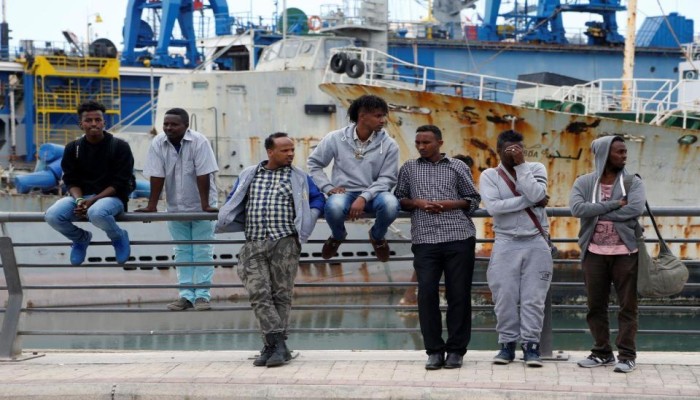
Malta Recorded Lowest Number of Asylum Applications Since 2010, EUAA Reports
Malta registered its lowest number of asylum applications since 2010 in the year 2024, according to the European Union Agency for Asylum’s (EUAA) latest annual report.
The country received 439 asylum applications last year—a significant 40% drop compared to the 729 applications submitted in 2023.
This decline reflects a broader trend across the European Union, where total asylum applications fell by 11% overall.
In terms of applications per capita, Cyprus, Greece, and Ireland ranked highest among EU member states. In absolute numbers, the top three recipients were Germany (237,314), Spain (165,767), and Italy (158,867).
Malta ranked 18th per capita among EU countries for the number of asylum applications in 2024.
The majority of applicants in Malta were Syrian nationals, representing 44% of the total. Other notable groups included Colombians (6%) and Bangladeshis (5%).
This marks the fifth consecutive year of declining asylum applications in Malta.
The report’s findings align with data from the Malta Migration Archive, which revealed that rescues of migrant boats by Malta’s Armed Forces have dropped by 90% since 2020. During the same period, interceptions by Libyan militia forces surged by 230%.
This trend coincides with the migration coordination agreement Malta signed with Libya in 2020, the details of which remain largely undisclosed. Both asylum applications and rescues have declined steadily since the deal was struck.
Despite the overall decrease in applications, Malta granted refugee status to 50 individuals in 2024, up from just 18 in 2023.
The EUAA report noted that Malta remained active at the EU level in 2024, advocating for enhanced border control, prevention of irregular migration routes, and strengthened cooperation with third countries—particularly in areas such as returns and the dismantling of smuggling networks.
Additionally, the report highlighted Malta’s collaboration with Libyan authorities in efforts to combat organised crime and human trafficking.
However, the report also drew attention to concerns raised by civil society organisations, particularly regarding detention conditions and search and rescue operations. Several UN Human Rights Treaty Bodies issued recommendations urging Malta to:
-
Prevent arbitrary detention,
-
Respect the principle of non-refoulement,
-
Ensure timely and effective search and rescue operations,
-
Guarantee safe and prompt disembarkation,
-
Support humanitarian rescue efforts.
The report concluded by noting that the Maltese government rejected or disputed many of these concerns.