
Malta marks International Holocaust Remembrance Day
Staff Reporter , Published: January 28, 2026, 6:31 am
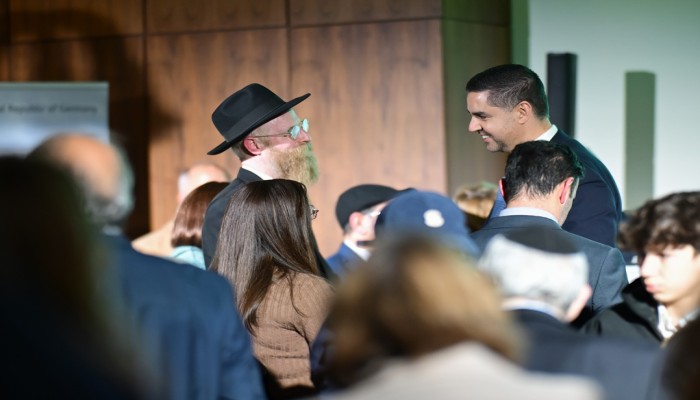
Malta on Tuesday commemorated International Holocaust Remembrance Day, with Deputy Prime Minister and Minister for Foreign Affairs and Tourism Ian Borg joining the Tayar Foundation and the embassies of Germany and Israel for an evening of remembrance and reflection.
Addressing the event, Dr Borg described the day as a call to confront the consequences of hatred, racism, dehumanisation and indifference. He stressed that the Holocaust’s origins serve as a powerful warning for societies today.
“The Holocaust did not begin with death camps, but with words, with exclusion, and with the gradual erosion of human dignity,” he said, underlining the importance of challenging hate speech and discrimination at their earliest stages.
Dr Borg noted that as the years pass, remembrance becomes a shared responsibility that must be passed from one generation to another through education, dialogue and a firm commitment to reject all forms of hatred. He said the Holocaust should not be confined to history books or annual ceremonies, but must continue to shape values and guide actions.
Malta’s ongoing efforts in this area were also highlighted. Through its second National Action Plan Against Racism, the country has placed the fight against antisemitism and other forms of hatred and racism at the centre of its work towards a more cohesive and inclusive society.
The commemoration also featured interventions by Sir Bernard Eder KC, who spoke about his family’s experience as wartime refugees in Malta after fleeing Nazi persecution in Vienna. Historian Nathaniel Calleja Gera addressed Malta’s immigration policy during the Second World War.
Photos: ODPM-MFT/DOI
Footage: DOI